

Import Export Code Registration In India | Apply Online Easily

For businesses looking to expand their operations globally, obtaining an Import Export Code (IEC) is a critical step. Issued by the Directorate General of Foreign Trade (DGFT), this 10-digit code is essential for importing and exporting goods and services in India.
The IEC is a lifetime validity code that enables businesses to engage in international trade efficiently. Without it, importers and exporters cannot avail of various benefits and schemes offered by the DGFT. Our comprehensive guide will walk you through the IEC registration process, covering essential requirements, documentation, and step-by-step procedures.
Whether you’re a new entrepreneur or an established business, understanding the IEC registration process is vital for streamlining your international operations.
Key Takeaways
- Understanding the significance of IEC for international trade in India.
- Learning the essential requirements and documentation for IEC registration.
- Following a step-by-step guide to apply for IEC online.
- Recognizing the benefits of IEC registration for businesses.
- Understanding post-registration compliance requirements.
Understanding Import Export Code (IEC)
For businesses looking to import or export goods and services, obtaining an Import Export Code (IEC) is the first step. The IEC is a unique 10-digit identification number issued by the Directorate General of Foreign Trade (DGFT).
What is an Import Export Code?
An Import Export Code (IEC) is a mandatory prerequisite for any individual or business entity looking to engage in importing or exporting goods and services to or from India. It serves as a business passport for international trade, ensuring compliance with India’s foreign trade regulations.
Role of DGFT in IEC Registration
The DGFT, operating under India’s Ministry of Commerce and Industry, is the governing body responsible for issuing IEC registrations and implementing foreign trade policies. The DGFT plays a crucial role in regulating and facilitating international trade.
| Key Features of IEC | Description |
|---|---|
| Unique Identifier | 10-digit identification number |
| Issuing Authority | Directorate General of Foreign Trade (DGFT) |
| Validity | Lifetime validity with no renewal requirements |
Importance of Import Export Code Registration India
For businesses in India, IEC registration is not just a formality, but a legal necessity for international trade. The Import Export Code serves as a unique identifier for businesses engaged in import and export activities.
Legal Requirements for International Trade
The Import Export Code is a legal requirement for all businesses and individuals involved in international trade. It acts as the primary identification for customs clearance and foreign exchange transactions. Without a valid IEC, businesses cannot legally import goods into India or export products to international markets.
Situations Where IEC is Mandatory
The IEC is mandatory in several situations: when clearing shipments through customs, when sending money abroad through banking channels, when shipping goods through customs ports, and when receiving foreign currency payments. Financial institutions and customs authorities require the IEC for verification purposes to ensure compliance with India’s foreign trade policies and regulations.
Key situations where IEC is required include:
- Clearing shipments from customs authorities
- Sending money abroad through banks
- Shipping goods through customs ports
- Receiving foreign currency directly into a bank account
Key Benefits of Obtaining an IEC
The Import Export Code registration is a vital process that offers numerous benefits to businesses engaged in international trade. By obtaining an IEC, companies can significantly enhance their global presence and operational efficiency.
Lifetime Validity with No Renewal Required
One of the most significant advantages of obtaining an IEC is its lifetime validity, eliminating the need for periodic renewals and reducing administrative burden for businesses. This means that once an entity obtains an IEC, it remains valid for the lifetime of the business without requiring any renewal.
Access to Global Markets
The IEC registration opens doors to global markets, allowing businesses to legally export their products and services internationally and import necessary materials from abroad. This facilitates business expansion and growth.
Government Incentives and Benefits
Registered businesses can access various government incentives, including duty drawbacks, export promotion schemes, and benefits under foreign trade policies designed to boost international trade.
Simplified Banking Transactions
Banking transactions for international trade become significantly more streamlined with an IEC, as it facilitates foreign currency transactions and simplifies the documentation process for cross-border payments.
Tax Refunds and Exemptions
IEC holders are eligible for various tax refunds and exemptions, including GST exemptions on exports and duty drawbacks, which can substantially reduce operational costs and improve profit margins.
| Benefits | Description |
|---|---|
| Lifetime Validity | No renewal required, reducing administrative burden |
| Global Market Access | Export and import goods and services internationally |
| Government Incentives | Duty drawbacks, export promotion schemes, and other benefits |
Eligibility Criteria for Import Export Code Registration
Understanding the eligibility criteria for Import Export Code (IEC) registration is crucial for individuals and businesses looking to engage in international trade. The eligibility requirements are straightforward and designed to ensure that only legitimate entities participate in import-export activities.
For Individuals
Individuals seeking to obtain an IEC must meet specific requirements. They need a valid PAN card, an active bank account in their name, and must provide identity verification through Aadhaar or other government-issued identification. Unlike business entities, individuals do not need a business registration number to apply.
For Business Entities
Business entities, including sole proprietorships, partnership firms, and companies, are eligible for IEC registration. They must have a valid PAN card registered under the business name, an active current bank account, and verifiable proof of their registered business address. An authorized signatory is required for partnerships and companies to handle the IEC registration process.
Essential Documents Required for IEC Registration
Registering for an IEC requires gathering and submitting various essential documents. The IEC registration process is streamlined when all necessary documents are prepared in advance.
Identity and Address Proof Documents
To verify the identity and address of the applicant, certain documents are mandatory. These include:
- A copy of the PAN Card for the individual, firm, or company.
- Government-issued ID such as Aadhaar card, voter ID, or passport for the proprietor.
- Proof of address of the business premise, which can be a sale deed, lease deed, rent agreement, or utility bills.
Ensuring that these documents are valid and properly attested is crucial to avoid application rejection.
Bank and Business-Related Documents
In addition to identity and address proof, certain bank and business-related documents are required for IEC registration.
- A canceled cheque from the current bank account in the name of the individual or business entity.
- Proof of establishment or incorporation, such as registration certificates or partnership deeds.
- A self-addressed envelope for the delivery of the IEC certificate by registered post.
Having these documents ready facilitates a smooth IEC registration process. It is essential to ensure that all submitted documents are clear, valid, and properly attested as per DGFT guidelines.
Step-by-Step Guide to Apply for Import Export Code Online
Businesses looking to engage in import and export activities can apply for an IEC online by following a simple step-by-step process on the DGFT website. This guide will walk you through the process, ensuring a smooth and efficient registration.
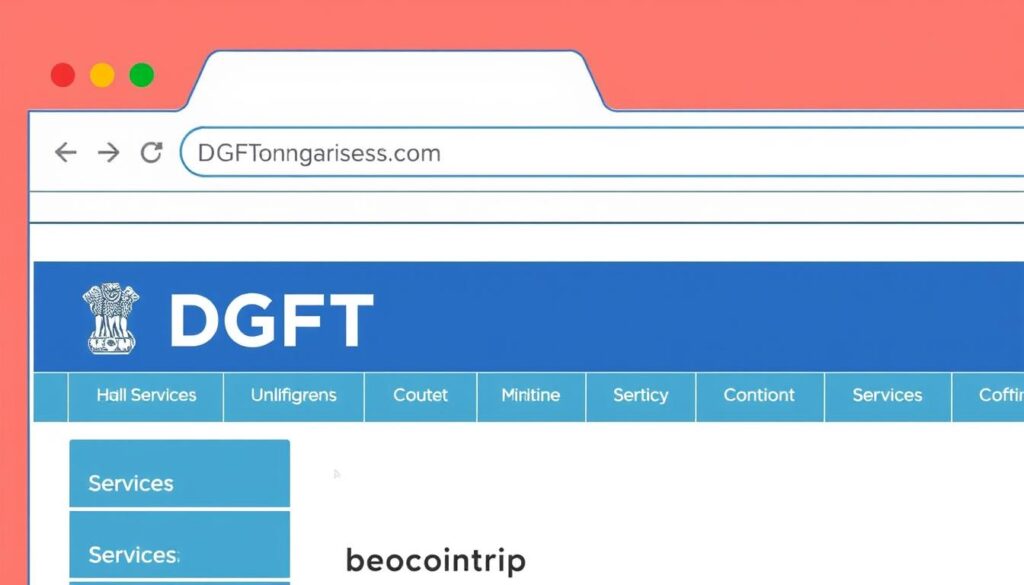
Creating an Account on DGFT Website
The first step in applying for an IEC online is creating an account on the official DGFT website. To do this, visit the DGFT portal, navigate to the ‘Services’ tab, and select ‘IEC Profile Management’ from the dropdown menu. Registration requires entering your personal details and verifying your identity through an OTP sent to your registered mobile number.
Upon successful validation of the OTP, you will receive a temporary password to access your account. This step is crucial for securing your application process.
Filling the IEC Application Form
Once logged in, navigate to the ‘Apply for IEC’ option on the dashboard and click on ‘Start Fresh Application’ to begin the formal application process for your Import Export Code. The application form requires comprehensive information, including general details, proprietor/partner/director information, bank account details, and other business-specific information that must be filled accurately.
Ensure that all information is correct and up-to-date to avoid any delays in the processing of your application.
Document Upload Process
The document upload process involves attaching all required documents in the specified format (usually PDF) and ensuring they meet the size limitations set by the DGFT portal. This step is critical to avoid technical issues during submission.
Required documents typically include identity and address proof, bank and business-related documents. Ensure that you have all necessary documents ready before starting the application process.
Application Fee and Payment Process
Understanding the application fee and payment process is crucial for IEC registration. The IEC registration process involves a fee payment that is relatively nominal, making it accessible for businesses of all sizes.
Current Fee Structure
The current fee for IEC registration is ₹500 plus applicable GST, making it an affordable process for entities looking to engage in international trade. This fee structure is designed to be inclusive, allowing small and medium enterprises to participate in global commerce.
| Fee Component | Amount |
|---|---|
| Basic Fee | ₹500 |
| Applicable GST | As per GST rates |
| Total Fee | ₹500 + GST |
Payment Methods Accepted
The DGFT portal accepts various payment methods for the IEC registration fee, including net banking, credit cards, debit cards, and UPI payments. This flexibility allows applicants to choose their preferred payment method, making the process more convenient.
The payment process is integrated into the online application system, ensuring a seamless transaction experience.
Processing Time and Application Tracking
After submitting your IEC application, it’s essential to know how long it takes to process and how to track its status. The Directorate General of Foreign Trade (DGFT) processes IEC registrations within a reasonable timeframe.
Standard Processing Timeline
The standard processing timeline for IEC registration typically ranges from 10 to 15 working days from the date of application submission, provided all documents are in order and properly verified. In some cases, the processing may be expedited, with some applicants receiving their IEC within a week of application.
How to Track Your IEC Application Status
Applicants can track their IEC application status by logging into their account on the DGFT portal and navigating to the application tracking section. The DGFT portal sends email notifications at various stages of the application process, including confirmation of submission, document verification, and final approval or rejection.
Once approved, the IEC certificate is sent to the registered email address and can also be downloaded directly from the DGFT portal.
Digital Signature Requirements for IEC Registration
To apply for an IEC code online, a Digital Signature Certificate is essential. The Directorate General of Foreign Trade (DGFT) mandates the use of Digital Signatures for authenticating IEC applications, ensuring a secure and legally valid process.
Digital Signature Certificates (DSCs) provide a secure way to sign electronic documents submitted to the DGFT. The DGFT accepts Class 2 and Class 3 Digital Signature Certificates issued by licensed Certifying Authorities in India.
Types of Digital Signatures Accepted
The DGFT accepts Class 2 and Class 3 Digital Signature Certificates. While both are valid, Class 3 DSCs are recommended for higher security in business transactions, providing an additional layer of verification.
Alternatives to Digital Signatures
For those without a Digital Signature Certificate, the DGFT portal offers an alternative authentication method using Aadhaar-based e-Sign. This method verifies identity through an OTP sent to the Aadhaar-linked mobile number, providing a convenient alternative for applicants.
Organizations that already possess an IEC code can obtain a special DGFT-issued Digital Signature Certificate, which offers up to 50% savings on license fees for future trade-related applications. Ensuring that the DSC is valid and properly installed is crucial for a smooth application process.
Common Mistakes to Avoid During IEC Registration
When applying for an Import Export Code (IEC), it’s crucial to avoid common mistakes that can lead to application rejection or delays. A successful IEC registration process requires careful attention to detail in both documentation and the application form.
Documentation Errors
Documentation errors are a common reason for IEC application rejections. Submitting unclear, expired, or improperly scanned documents can lead to delays or outright rejection. Ensuring that all documents meet the DGFT’s requirements for clarity and authenticity is vital. Common issues include inconsistencies between the information provided in the application and supporting documents, particularly regarding business name, address, and bank account details.
Application Form Mistakes
Mistakes in the IEC application form can also cause significant delays. Incomplete information or inconsistencies between different sections of the form can lead to rejections. Applicants must ensure that all mandatory fields are filled correctly and that the information provided is comprehensive and accurate. Technical errors, such as uploading documents in incorrect formats or exceeding file size limitations, should also be avoided to prevent processing delays.
Post-Registration Compliance Requirements
After obtaining an Import Export Code (IEC), businesses must comply with post-registration requirements to maintain their international trade operations. This involves fulfilling specific obligations to ensure continued compliance with regulations.
Annual IEC Updates
It is mandatory to update the IEC profile every year during the April-June period, regardless of any changes to business information. Failure to do so results in deactivation of the IEC, disrupting import-export operations. To avoid this, businesses should prioritize annual updates.
- Annual updates are mandatory and must be completed during the April-June period each year.
- Non-compliance leads to IEC deactivation, requiring reactivation upon successful updation.
Maintaining Proper Records
Businesses must maintain comprehensive records of all import-export transactions, including shipping bills, bills of entry, invoices, and other customs documentation for at least five years. Any changes to business details must be promptly updated in the IEC profile through the DGFT portal.
| Record Type | Retention Period | Purpose |
|---|---|---|
| Shipping Bills | 5 years | Export documentation |
| Bills of Entry | 5 years | Import documentation |
| Invoices | 5 years | Transaction records |
Exemptions from Import Export Code Registration
While Import Export Code (IEC) registration is mandatory for most international trade activities, there are specific exemptions and special cases to consider. Understanding these exemptions can help individuals and businesses determine whether they need to register for an IEC.
Categories Exempt from IEC Requirements
Certain categories are exempt from obtaining an Import Export Code. These include:
- Central and state government ministries and departments when engaging in import or export activities as part of their official functions.
- Individuals importing or exporting goods for personal use, not intended for commercial purposes, trade, manufacturing, or agriculture.
- Notified charitable institutions engaged in importing or exporting goods for humanitarian purposes, subject to specific government notifications and approvals.
Special Cases and Considerations
There are also special cases where exemptions apply or alternative arrangements are made. For instance:
- Individuals trading with neighboring countries like Nepal, Myanmar (via Indo-Myanmar border areas), and China, provided the CIF value of a single consignment does not exceed specified limits.
- Certain traders registered under GST may use their PAN as a substitute for IEC for import-export purposes, though this provision has specific limitations and conditions.
These exemptions and special considerations highlight the nuances of IEC registration requirements, providing flexibility for various types of traders and organizations.
Integrating IEC with Other Business Registrations
Integrating your Import Export Code (IEC) with other business registrations is a crucial step for businesses engaged in international trade. This integration ensures seamless coordination between customs procedures and tax compliance, making it easier for businesses to operate globally.
IEC and GST Integration
One of the key integrations for businesses is linking their IEC with their Goods and Services Tax (GST) registration. This process involves connecting your GSTIN with your IEC on the ICEGATE portal, ensuring that information is consistent across government databases. The integration is vital for claiming GST exemptions on exports and ensuring proper tax treatment for imported goods. By doing so, businesses can prevent potential tax disputes and compliance issues.
ICEGATE Verification Process
The ICEGATE verification process is another critical aspect of IEC integration. It confirms that your IEC is properly registered in customs records, allowing for smooth clearance of goods at ports. Businesses should regularly verify their ICEGATE registration status using the official utility to ensure their import-export operations proceed without administrative hurdles. This verification helps in avoiding delays due to verification issues.
Business Types That Need Import Export Code
Various business types require Import Export Code registration to facilitate international trade. An Import Export Code (IEC) is crucial for companies engaged in global commerce, enabling them to import and export goods and services legally.
Manufacturing and Trading Companies
Manufacturing companies need IEC registration to import raw materials, machinery, and components necessary for production, as well as to export their finished products to international markets. Trading firms dealing in textiles, electronics, machinery, and consumer goods also require an IEC to facilitate cross-border trade, customs clearance, and international payments. E-commerce businesses engaged in international sales or sourcing products from overseas suppliers must obtain an IEC to manage customs procedures and ensure compliance with import-export regulations.
Service Providers and Other Businesses
Service providers such as IT companies, consultancy firms, and financial services organizations need IEC registration when they provide services to international clients or receive payments in foreign currency. Specialized industries, including pharmaceutical companies, food and beverage exporters, handicraft producers, educational institutions, and renewable energy companies, all require IEC registration to participate in their respective international supply chains and markets. Registering for an IEC is a critical step for businesses looking to expand their global footprint.
Troubleshooting Common IEC Registration Issues
Common issues during IEC registration can significantly delay the process, affecting business operations. Understanding these challenges and their solutions is crucial for a smooth registration experience.
Application Rejection Reasons
Applications are often rejected due to discrepancies between the information provided in the application form and the supporting documents. Common discrepancies include business name, address, and bank account details.
- Inconsistent information across documents
- Technical issues such as improper document format or exceeded file size limits
- Problems with digital signature verification
Solutions for Common Problems
To avoid application rejection, ensure that all information is consistent across documents. For technical issues, verify that documents are in the correct format and within the specified size limits.
| Issue | Solution |
|---|---|
| Inconsistent Information | Ensure consistency across all documents |
| Technical Issues | Verify document format and size |
| Digital Signature Problems | Check DSC installation and validity |
Conclusion
In today’s interconnected economy, acquiring an Import Export Code is essential for businesses seeking to explore international markets. The IEC registration process is a crucial step that enables companies to comply with India’s foreign trade regulations and access global opportunities.
With its lifetime validity and no renewal requirements, the IEC code offers a one-time solution for businesses to legally participate in import-export activities. This not only simplifies banking transactions for international trade but also provides access to government incentives and tax refunds.
By obtaining an IEC registration, businesses can enhance their credibility in the global marketplace and take advantage of emerging opportunities in the Indian economy. Our professional assistance is available to guide you through the code registration process, ensuring compliance with the foreign trade policy and facilitating a smooth export-import experience.
With the right guidance, businesses can navigate the complexities of international trade and capitalize on the benefits of having an IEC code. By leveraging our expertise, you can ensure a seamless registration process and focus on expanding your business globally.
About ADMS :
At ADMS eBiz Pvt Ltd, based in New Sangavi, Pune, we provide end-to-end assistance for Import Export Code (IEC) Registration to help businesses start and expand their international trade operations with ease. Our expert compliance team ensures seamless documentation, accurate filing, and smooth coordination with DGFT, enabling hassle-free approval for individuals, startups, and MSMEs. With a commitment to precision, transparency, and timely service delivery, we serve clients across Pune, Pimpri-Chinchwad (PCMC), Wakad, Baner, Aundh, Nigdi, and nearby regions, making global business entry easier and more efficient for every entrepreneur.
 Previous Post
 Next Post